How to Choose a Security Camera for Your UK Home: A Practical Guide (2026)
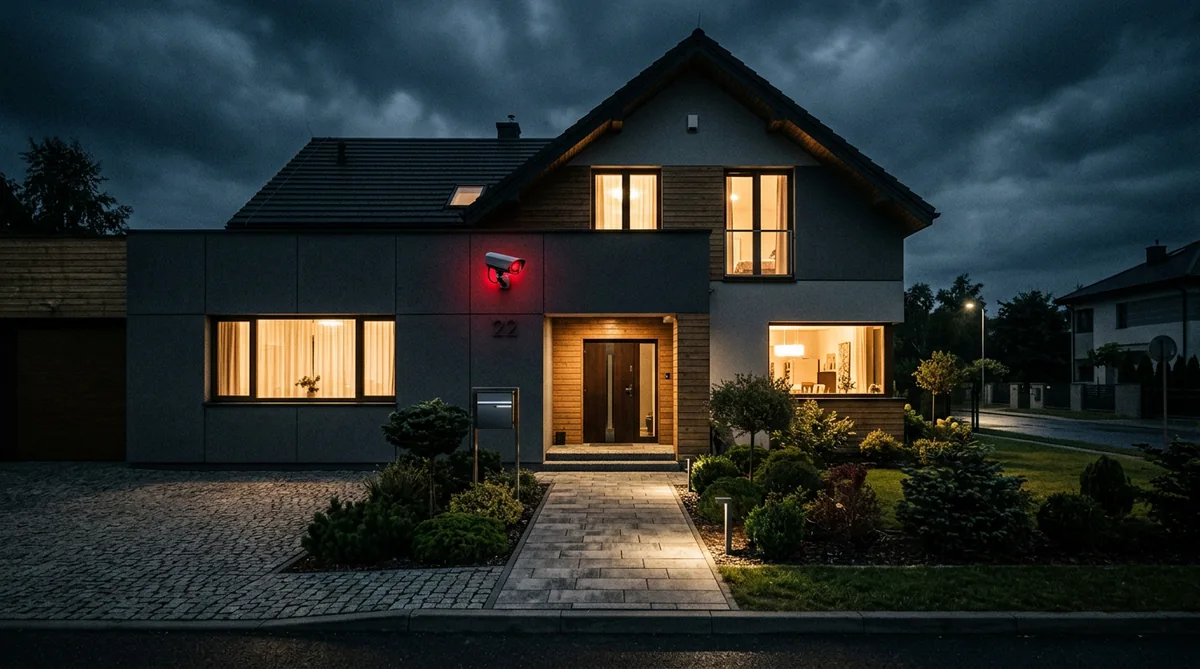
Home security has changed significantly over the past few years. CCTV cameras that once required professional installation and dedicated recorders can now be set up by anyone in an afternoon, connecting directly to a smartphone app over WiFi. Prices have fallen, image quality has improved, and the range of options available to UK homeowners is wider than ever.
That range, however, can make choosing the right camera genuinely confusing. Do you need a wired system or a wireless one? What resolution is enough? Does night vision quality actually vary between models? This guide sets out the key questions to ask before you buy.
What to Think About First
Before looking at any specific product, it helps to be clear about where you intend to use the camera and what you're trying to protect. Indoor cameras and outdoor cameras differ in construction — outdoor models need to be rated for weather resistance (look for IP65 or above). A camera covering a front door has different requirements to one monitoring a large back garden or a commercial yard.
Power is one of the first practical decisions. Mains-connected cameras are reliable and continuous, but require access to a power outlet near the mounting point. Battery-powered models offer more flexibility — they can go almost anywhere — but need periodic recharging (or an optional solar panel). If you're monitoring a detached garage, shed, or outbuilding with no power supply, a battery or solar option is often the only viable choice without significant installation work.
Resolution and night vision capabilities also vary considerably. Most cameras today offer at least 1080p (Full HD), which is adequate for most home use cases. Higher-resolution 2K and 4K cameras provide more detail — useful if you need to read number plates or identify faces at a distance. At night, many cameras switch to infrared (black-and-white) mode; some newer models offer full-colour night vision using a larger aperture lens, which can be more useful when colour information matters.
The Most Common Options
There are three main types of security camera you're likely to encounter at this price point:
Battery-powered WiFi cameras are the most widely adopted option for first-time buyers. They connect to your home WiFi network, store footage on an internal SD card or in the cloud, and send motion alerts to your phone. Installation involves screwing a small bracket to a wall — no cables, no electrician. The trade-off is that you'll need to recharge the battery every few months depending on how active the camera is.
Solar-powered cameras work similarly to battery cameras but include a small solar panel that keeps the internal battery topped up throughout the day. This makes them effectively maintenance-free in UK outdoor conditions for most of the year, though in extended cloudy periods performance can vary. They're well-suited to garden perimeters, driveways, or any outdoor location with reasonable daylight exposure.
Wired PoE cameras (Power over Ethernet) connect via a single network cable that carries both power and data. They're the most reliable option — no battery to run down, no WiFi dependency — and typically offer the best continuous recording quality. However, they require cable runs from a central recorder (NVR) to each camera position, which usually means some installation effort. They're popular for garages, driveways with mains access, and commercial settings.
How to Compare Cameras
When you're comparing specific models, it's worth working through a short checklist:
| Factor | What to look for |
|---|---|
| Location | Indoor or outdoor? If outdoor, check the IP rating — IP65 minimum for most UK climates, IP66 or IP67 for exposed positions. |
| Power source | Is mains power available near the mounting point? If not, battery or solar is the practical choice. |
| Resolution | 1080p is sufficient for general monitoring. 2K (4MP) or 4K (8MP) is worth considering if you need to identify faces or number plates at a distance. |
| Night vision | Infrared night vision gives clear black-and-white footage in darkness. Colour night vision (larger aperture lens) retains colour information but needs some ambient light to work well. |
| AI / smart detection | Basic motion detection triggers on anything that moves — animals, tree branches, passing cars. AI-based person and vehicle detection significantly reduces false alerts. |
| Storage | Most cameras support local microSD storage and optional cloud subscriptions. Check whether the camera works without a subscription for basic recording. |
What Most UK Homeowners Choose
For a first camera covering a front door, porch, or driveway, battery-powered WiFi cameras are consistently the most popular choice. They're straightforward to install, work well in typical UK weather when rated IP65 or above, and don't require any permanent wiring. Running costs are low — most models need recharging two to four times a year under normal use.
For garden perimeters or side passages with no nearby power, solar-powered options remove the need for recharging altogether. For properties that already have network cabling — or where an installer is fitting a multi-camera system — PoE wired cameras remain the most reliable long-term choice.
There's no single right answer. The best camera is the one that fits your specific location, power situation, and budget — and that you'll actually use.
See our camera range
We stock a small selection of wireless, solar and wired cameras suited to UK homes. Each product page includes full specifications.
View our camera range →LordsWatch provides security camera products for UK homes and businesses. This guide reflects general market information and is intended to help buyers understand their options. It does not constitute professional security advice.